
What we've been up to
Oscar Kilo Conference and Awards 2026: Turning strategy into reality
Almost 200 delegates from across policing, partner organisations and wellbeing services came together at Crewe Hall Hotel & Spa for the National Police Wellbeing Service Annual Conference and Oscar Kilo Awards 2026. Under the theme From Strategy to Reality, the two-day event focused on how national ambitions, standards and evidence can be translated into meaningful support for officers and staff.
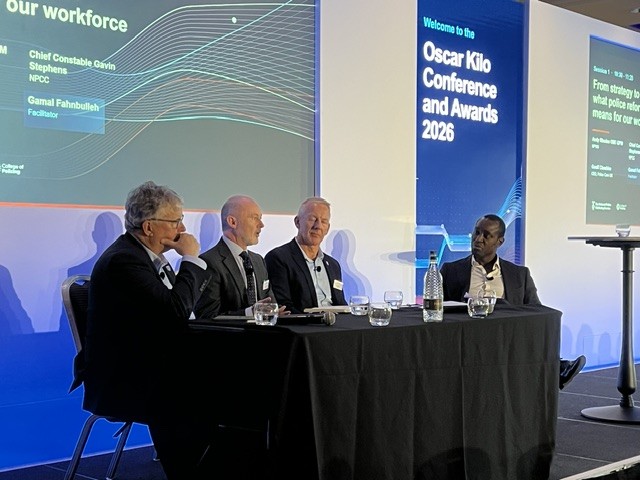
Hosted by ITV broadcaster Gamal Fahnbulleh, the conference brought together leaders, practitioners, researchers and wellbeing experts to explore police reform, occupational health, workforce prioritisation, psychological health, recovery and suicide prevention. Throughout the event, speakers shared practical examples of how national wellbeing strategies are being implemented locally, with a strong focus on prevention, early intervention and creating supportive working environments. Delegates also took part in wellbeing activities through the Reset Yourself programme and heard powerful personal stories highlighting the real impact of wellbeing support.
A clear message emerged throughout the event: workforce wellbeing is fundamental to the future of policing. By sharing learning, working collaboratively and continuing to put people first, forces across the UK are helping turn ambition into action and strategy into reality.
Read the full conference round up
Oscar Kilo Awards 2026 celebrate wellbeing excellence across policing
The Oscar Kilo Awards 2026 recognised the individuals, teams and organisations making a real difference to workforce wellbeing across UK policing. Held during the annual Oscar Kilo Conference, the awards celebrated innovation, collaboration and commitment to creating healthier, more supportive workplaces for officers and staff.
This year's winners highlighted the breadth of wellbeing activity taking place across policing, with achievements recognised in areas including staff engagement, family support, healthy living, occupational health, peer support, trauma support, suicide prevention and Operation Hampshire. Award winners were:
- Staff Engagement - Yorkshire and Humber Regional Organised Crime Unit
- Families and Leavers - Lincolnshire Police
- Healthy Living - Leicestershire Police
- Occupational Health - Civil Nuclear Constabulary
- OK9 Wellbeing Dogs - South Wales Police
- Peer Support - Police Service of Northern Ireland
- Trauma Support - Avon and Somerset Police
- Operation Hampshire - Gwent Police
- Suicide Prevention - Northumbria Police
Special recognition was also awarded to NARPO for its commitment to supporting police leavers, while the International Wellbeing Award was presented to the Ministry of Interior, Kingdom of Bahrain, for its approach to employee wellbeing and engagement.
The awards continue to showcase the outstanding work taking place across policing to support wellbeing, recognising those who are helping to improve the lives of officers, staff, volunteers, families and police leavers. By sharing and celebrating good practice, the awards help inspire forces and organisations to continue putting wellbeing at the heart of their work.
Read more about this year's winners
Mental Health Crisis Line extended to police leavers
We've extended our independent and confidential Mental Health Crisis Line to support people who have left policing, regardless of their role, when they left, or the reason for leaving.
Available 24 hours a day, seven days a week, the Crisis Line provides immediate support to anyone experiencing a mental health crisis or suicidal thoughts. Since launching for serving officers and staff in England and Wales last year, the service has received more than 440 calls, offering vital in-the-moment support when it is needed most. You can access the Mental Health Crisis Line by calling 0300 131 2789.
Delivered in partnership with TASC – The Ambulance Staff Charity, the service is staffed by counsellors trained in suicide prevention who understand both the realities of policing and the challenges that can come with leaving the service.
The extension is an important part of our ongoing suicide prevention work, ensuring that people can continue to access confidential support whenever they need it, even after their policing career has ended.
New deep-dive report explores what is really affecting wellbeing across policing
We've published the first of three deep-dive reports from the 2026 National Police Workforce and Wellbeing Survey, providing a closer look at the factors shaping workforce wellbeing and where action is most likely to make a difference.
Drawing on responses from more than 56,000 officers and staff, the report explores the drivers behind issues such as fatigue, emotional exhaustion and burnout. The findings show that workload pressure remains the factor most strongly linked to poorer wellbeing, with unrealistic time pressures and an inability to take sufficient breaks having a significant impact across the workforce.
The report highlights the need to look beyond individual resilience and consider the wider working environment, including demand management, bureaucracy, duplication and leadership practices. It also reinforces the importance of targeted support for different groups across policing, recognising that wellbeing challenges can have different causes and require different solutions.
As part of our commitment to turning evidence into action, the findings will help inform future wellbeing activity both nationally and locally. Two further deep-dive reports, focusing on leadership and change, and access to wellbeing support, will be published in the coming months.
Read the full report and findings
National consensus sets out what good occupational health looks like in policing
We've published a new national consensus document that defines what officers and staff should be able to expect from occupational health services across policing. The agreement has been signed by key policing partners, including the Home Office, College of Policing, NPCC, Police Federation of England and Wales, Police Superintendents' Association and UNISON.
The document, Police Occupational Health: A National Consensus, sets out the principles that should underpin occupational health services, including accessibility, fairness, professionalism, timeliness and accountability. It also includes a commitment from national organisations to support forces in delivering high-quality occupational health provision.
Occupational health plays a vital role in helping officers and staff stay well at work, return safely following illness or injury, and access workplace adjustments when needed. The consensus forms part of wider occupational health reform across policing and supports national efforts to strengthen workforce wellbeing.
Alongside the consensus, we've also published supporting documents outlining the case for investment in occupational health and a roadmap for future reform.
How wearable technology is helping us support police wellbeing
At the National Police Wellbeing Service (NPWS), we continue to explore new ways to help officers and staff better understand the impact of sleep, fatigue, stress and recovery on their wellbeing.
With recent workforce wellbeing survey findings highlighting high levels of exhaustion and burnout across policing, we have been working with researchers and forces to understand how wearable technology can support healthier working practices and improve wellbeing outcomes.
Research delivered with Liverpool John Moores University, Merseyside Police and Oscar Kilo has shown that wearable devices can help increase awareness of sleep quality, recovery and stress levels, enabling officers and staff to make positive changes to their health and wellbeing. Participants have reported improved understanding of how work patterns affect them and, in many cases, have made changes to their sleep, exercise and recovery routines.
Building on this evidence, we have distributed more than 2,000 wearable devices across 27 forces through our Police STAR-funded sleep, fatigue and recovery biometrics programme. The initiative combines wearable technology with education, wellbeing resources and practical support to help individuals better understand and manage the demands of policing.
Our experience shows that wearable technology is most effective when used alongside expert guidance, learning opportunities and a wider organisational commitment to wellbeing. Ensuring participation remains voluntary and personal data remains protected is also central to building trust and engagement.
The learning from this work is helping to shape ResetU, our new wellbeing app, which combines wearable data with policing-specific information to provide personalised wellbeing insights and support.
While wearable technology is not a standalone solution, it is becoming an important part of how we help officers and staff take ownership of their wellbeing, improve recovery and develop healthier, more sustainable ways of working.
Oscar Kilo wellbeing van begins a new chapter with PSNI
One of our Oscar Kilo wellbeing vans has been handed over to the Police Service of Northern Ireland (PSNI) on a long-term loan, extending the reach of a service designed to support the wellbeing of officers and staff wherever they work.
The handover took place at Stranraer Port, where the vehicle was received by PSNI colleagues. The van will provide a welcoming space for wellbeing conversations, rest and recovery, and access to support, particularly during deployments, major incidents and operational activity.
Oscar Kilo wellbeing vans have been used across UK policing to bring wellbeing support directly to officers and staff, offering a practical and visible reminder that looking after people remains a priority.
We are delighted that the vehicle will continue its journey with PSNI and look forward to seeing the positive impact it will have in supporting colleagues across Northern Ireland.
Peer support update
Congratulations to this year's Peer Support Award recipients, it was great to see so many peer support coordinators and supporters come together to share learning and celebrate success. The quality of nominations highlighted the incredible impact peer supporters continue to have across policing.
In recent weeks we have also seen the true strength of the peer support community. Following the tragic loss of two colleagues in Cleveland, coordinators from across the country responded immediately to calls for assistance, offering their time and support to colleagues affected by the events. Many volunteers stepped forward to provide additional cover, including evenings and weekends, demonstrating the compassion and commitment that sits at the heart of peer support. On behalf of everyone involved, thank you to all those who offered their help.
Our next National Peer Support Coordinator meeting will take place online on Friday 8 January 2027, from 10am to 11am, with a guest speaker to be announced soon.
New peer support training dates covering January to March 2027 are now available. Alongside our established courses, we are also pleased to be piloting a new FLO-to-FLO Peer Support programme in November, designed to provide an additional layer of support for Family Liaison Officers. If you are interested in learning more about this programme or other specialist peer support training opportunities, please get in touch.
Science and innovation supporting police wellbeing
At the National Police Wellbeing Service (NPWS), we're always keen to share the latest research and innovation that can help improve wellbeing across policing.
The fourth edition of Policing Tomorrow, published by the Office of the Police Chief Scientific Adviser, places a strong focus on wellbeing and explores how science and technology are helping to support policing's greatest asset: its people.
The latest issue features research and innovations including the Trauma Tracker, work evaluating support for digital investigators, and the growing use of wearable technology and biometric data to help improve workforce health, wellbeing and resilience.
As we continue to work with partners across policing, academia and industry to build the evidence base for wellbeing, Policing Tomorrow provides valuable insight into how research and innovation are helping shape the future of policing.
Read the latest edition of Policing Tomorrow
Catch up on WellFest 2026
If you missed this year's WellFest virtual wellbeing festival, you can now watch the session recordings online. Organised by the wellbeing teams at Devon & Cornwall Police and Dorset Police Aliance, the annual event brought together a wide range of expert speakers covering topics designed to support health, wellbeing and personal resilience.
The recordings include sessions on sleep, trauma, stress management, financial wellbeing, mindfulness, nutrition, menopause awareness, neurodiversity, resilience and recovery, offering something for everyone across the policing workforce.
We're grateful to our colleagues in Devon & Cornwall and Dorset for making the recordings available, giving officers and staff another opportunity to access this valuable wellbeing content in their own time.
Remembering Bubba: A wellbeing dog who changed lives
West Yorkshire Police wellbeing dog Bubba has been posthumously nominated for the PDSA Order of Merit in recognition of his extraordinary contribution to officer and staff wellbeing.
A much-loved member of the Oscar Kilo 9 (OK9) wellbeing dog programme, Bubba served alongside his handler, PC Emma Davies, from 2023 until his passing in October 2025. During that time, the three-legged Springer Spaniel completed 144 wellbeing visits, providing more than 225 hours of support to officers, staff and trainees across policing.
Based at Carr Gate Training School, Bubba became a familiar and reassuring presence for new recruits, helping people navigate the pressures of police training and creating opportunities for conversations about wellbeing, mental health and personal challenges. His calm and intuitive nature helped officers and staff through difficult moments, from anxiety and grief to the aftermath of traumatic incidents.
Despite being one of 15 wellbeing dogs in West Yorkshire Police, Bubba received almost half of all feedback submitted about the force's OK9 programme, with colleagues regularly describing him as a legend, a superhero and the highlight of their day. His influence extended beyond West Yorkshire, inspiring other forces to explore wellbeing dog programmes of their own.
Known for rolling his ball towards anyone who needed encouragement and offering comfort without judgement, Bubba left a lasting impression on thousands of people. His legacy continues through the wellbeing support he inspired and the countless lives he touched.
Bubba may have had three legs, but he left an immeasurable impact on policing wellbeing, reminding us of the power of compassion, connection and simply being there when someone needs support.
Coming soon
Police family support
As part of our support for police families, we have pulled together, with assistance from The Ambulance Staff Charity, a comprehensive family 'toolkit'. It has been created to support partners, children, parents, close friends and family members of those who serve in the UK police service. It offers practical information, reassurance and guidance to help you understand policing life and where to turn for support when you need it.
This is currently being developed into web content which will be published in the coming weeks.
Join the national investigator wellbeing week of action
The NPCC Recruitment, Retention and Wellbeing of Investigators Portfolio is hosting its annual Investigator Wellbeing Week of Action from 9-13 November 2026, bringing together expert speakers from policing, academia and wellbeing services to explore the challenges facing investigators and the support available to them.
The free webinar programme covers topics including trauma, moral injury, suicide prevention, neurodiversity, resilience, burnout, psychological support and investigator wellbeing, all linked to the strategic themes of Prevent, Identify and Support.
Open to investigators, supervisors, wellbeing practitioners and leaders, the week offers practical learning, research insights and examples of good practice from across policing. Attendees can join as many or as few sessions as they wish.
Help us shape our next wellbeing film
We're developing the next film in our series of wellbeing stories and, for the first time, the focus will be on the experiences of police staff.
Our previous films, Purpose, Meaning and Identity, have explored different stages of a policing career through the experiences of serving officers, encouraging reflection, conversation and awareness of the wellbeing support available. Based on real-life experiences, each film is accompanied by expert guidance from a psychotherapist to help viewers explore the themes raised.
Now, we want to shine a light on the vital contribution made by police staff. This new film presents an opportunity to share the stories of a part of the workforce that is often less visible in wellbeing communications, while recognising the important role police staff play in delivering policing every day.
To help us create an authentic and meaningful film, we're inviting police staff from across policing to complete a short insight-gathering form. We want to hear about your role, the difference your work makes, the realities and challenges you face, and what helps you maintain your wellbeing.
Your feedback will help shape the story, themes and messages explored in the film, ensuring that police staff experiences are represented in an honest and relatable way. We may also invite some respondents to take part in follow-up focus groups or one-to-one conversations to provide further insight during the development process.
Whether you've worked in policing for many years or are relatively new to your role, we'd love to hear from you.
Complete the short form and help ensure police staff voices are at the heart of this project.
Complete the police staff insight form
We reserve all rights in all our News Articles. This means that our News Articles are not covered under our Non-Commercial College Licence and anyone wishing to re-use any part of them must first obtain our written permission.